Coat of Many Colours: Celebrating the Life of Dolly Parton
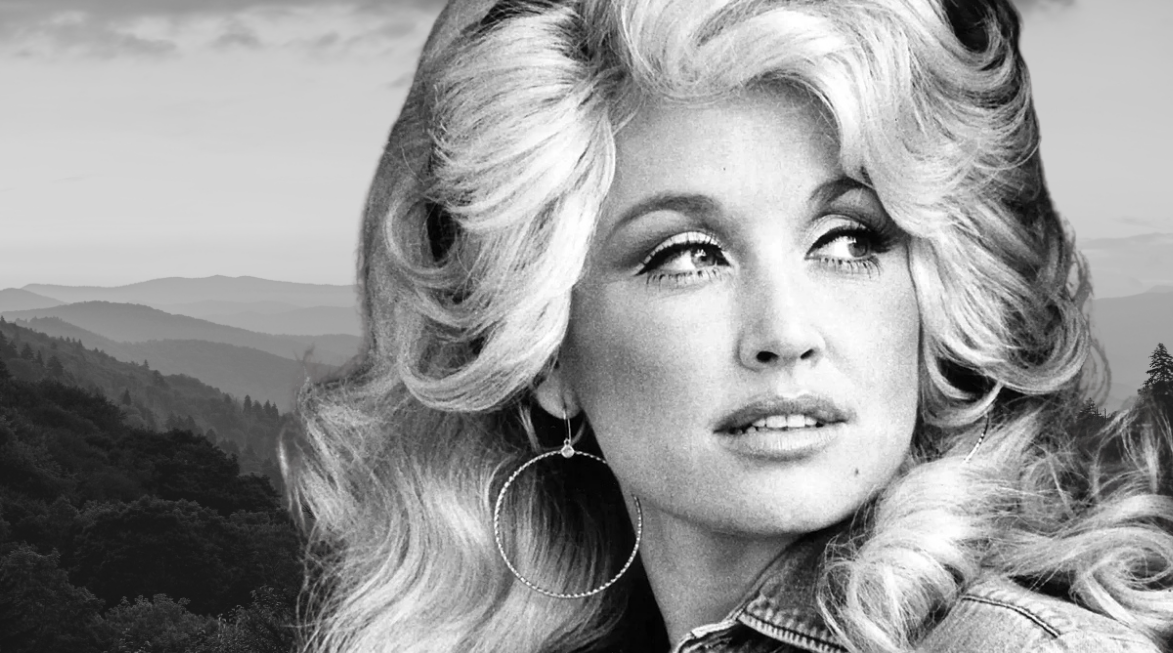
Dolly Parton died on 25 August, at the age of 80, after a brief battle with cancer.
It is genuinely hard to think of another figure in American popular culture who commanded such near-universal affection, cutting across almost every fault line in a bitterly polarised country – country music traditionalists and drag queens, evangelicals and the LGBTQ+ community she quietly supported for fifty years.
Her death deserves to be marked properly, and warmly, by the left: as the loss of one of the most genuinely beloved working-class artists America ever produced.
Music born of migration and struggle
To understand what Parton inherited and carried forward, it helps to understand where the Appalachian musical tradition itself came from, because it was never a purely “native” or insular culture, whatever some of the mythology of the American mountain South suggests.
It was built, like so much working-class culture, out of displacement and hardship.
The ballads, fiddle tunes and vocal styles of the region trace back largely to poor Scottish, English and Ulster Scots migrants – many of them tenant farmers driven from Ireland and Scotland by the same landlordism and economic ruin that scattered Irish emigrants across the world in the same centuries.
They carried their old ballads about love, death, and hard labour into the hollows of Tennessee, Kentucky, and North Carolina, and adapted them to a new and equally unforgiving landscape.
That fiddle tradition also owes a direct debt to Irish immigrants more broadly, distinct from the Ulster Scots strand; shared tune types, ornamentation, and even individual reels and jigs travelled straight from Irish traditional fiddling into Appalachian old-time music.
Layered onto that, and just as fundamental, was the music of enslaved and later freed African Americans: work songs, spirituals, call-and-response singing, and the banjo itself, an instrument with direct roots in West African gourd instruments.
What became “Appalachian music” – and later bluegrass and country – was a genuine synthesis built by displaced and oppressed people describing their own conditions to each other: mining disasters, religious devotion, poverty, grief, and the daily grind of survival.
It was never music made for the concert hall. It was music made by working people, in their own voices, about their own lives.
Dolly Parton, born generations later into that same rural poverty in the Great Smoky Mountains, inherited this tradition honestly.
Her 1971 song “Coat of Many Colors” – a true story about a coat her mother stitched from rags, and the cruelty of schoolchildren who mocked her for wearing it – sits squarely in that same lineage: class consciousness expressed not through slogans but through lived, specific, human detail, sung in the plain-spoken tradition of the mountain ballad.
It’s why the song has endured the way it has.
An unexplained connection: Dolly and Eminem
After her death, Eminem shared a private letter Parton had sent him when the two were inducted into the Rock & Roll Hall of Fame together in 2022.
She admitted she knew little about rap music but said she’d always felt an “unexplained connection” to him, “like I know you somehow.”
It’s not hard to see why: Eminem’s Detroit trailer-park upbringing and Parton’s Smoky Mountain poverty produced the same basic instinct – turning the raw material of a hard childhood into art.
That’s more than a poetic parallel between two artists – it reflects a real connection between the traditions themselves, one usually flattened by an industry that markets country and hip-hop to separate, racially coded audiences.
Look closely at the history and hip-hop and Appalachian bluegrass and banjo music share overlapping roots in race and class – both grew out of poor, marginalised communities using music to narrate their own conditions to each other, not unrelated or opposed traditions.
That connection isn’t purely historical, either: Appalachia has its own hip-hop scene today, drawing on the same regional storytelling tradition Parton came out of.
From a one-room cabin to the Queen of Country
Dolly Rebecca Parton was born on 19 January 1946 in Pittman Center, in the Great Smoky Mountains of East Tennessee, one of twelve children raised in a one-room cabin.
Her family’s poverty was severe even by the standards of Appalachia at the time, and she never buried it, softened it, or treated it as an embarrassment to be escaped and forgotten.
Instead, it became the raw material of her songwriting for the next six decades.
She left for Nashville the day after finishing high school in 1964 and built a body of work – as a singer, songwriter, and actress – that made her one of the best-selling recording artists in history, with dozens of number-one country hits and thousands of songs to her name, alongside an Oscar-nominated career writing film songs and a run of hit movies including 9 to 5 and Steel Magnolias.
A voice for working people, and for the marginalised
Look at the body of work itself, and Parton’s politics were often quietly radical.
9 to 5, both the 1980 film and the song that opened it, remains one of the most successful pieces of mass entertainment ever made about the grinding indignity of low-wage office work under an exploitative, handsy boss – and about workers seizing control of their own workplace.
That premise wasn’t invented in a writers’ room: the film took its name and much of its material from 9to5, the real organisation of Boston office workers who began organising against exactly this kind of boss in 1973, before Jane Fonda built a mass-market comedy around their fight.
It is difficult to overstate how many millions of people who would never watch an explicitly political film have that song’s message of solidarity against a bad employer lodged in their memory.
That set was where Parton and Jane Fonda became close, and the friendship held for over four decades, right up to Fonda’s tearful tribute in the days after Parton’s death.
Fonda herself has a long record of political activism, dating back to the Vietnam War era.
Parton was also an early and steadfast ally of LGBTQ+ people, performing for gay audiences from the 1970s onward and running gay-friendly venues at Dollywood at a time when almost no other major country star would go near either.
She never made a show of this or treated it as a brand exercise; she simply did it, for decades, and has spoken plainly and without qualification about being proud of it.
In 2020, at real risk to her standing with part of her audience, she used that year’s protests to tell Billboard plainly: “Of course Black lives matter. Do we think our little white asses are the only ones that matter? No!”
It wasn’t an isolated gesture – two years earlier she had already quietly dropped “Dixie” from the name of her Dixie Stampede dinner show, citing its Confederate-tinged associations.
Her wealth funded real material help too: research funding at the children’s hospital named for her in Memphis, disaster relief for her home region after the 2016 Gatlinburg wildfires, and a widely reported million-dollar donation toward Moderna’s Covid-19 vaccine research.
It also funded the Imagination Library, which has mailed over 330 million free books to children worldwide, including in Ireland since 2019.
Untouchable, on her own terms
One episode resurfacing widely since her death is Parton’s repeated refusal of the Presidential Medal of Freedom.
She was offered it twice by the Trump administration – first declining because her husband, Carl Dean, was ill, then again because she wouldn’t travel during the pandemic – and later hesitated on an offer from Biden too, saying accepting it from any president would feel like “doing politics.”
What’s striking is what didn’t happen in return: no MAGA-world figure used the refusals, or her BLM comments, or her decades of support for LGBTQ+ people, as an excuse to turn on her, even amid a culture war in which entertainers are routinely attacked for far less.
Her standing was simply too enormous, and too genuinely rooted in ordinary people’s affection, for anyone to risk the fight.
Part of what made that untouchable status possible was a persona it’s easy to imagine both sides mocking: big hair, acrylic nails, an enhanced figure, and a look she herself cheerfully described as “a blend of Mother Goose, Cinderella and the local hooker.”
Both the right and the liberal establishment have a long tradition of sneering at exactly this kind of woman – yet it largely didn’t happen to her, partly because she got there first: “it takes a lot of money to look this cheap,” as she put it.
A legacy worth celebrating
Much of her wealth did real good – the Imagination Library, disaster relief for her home region, vaccine research funding – and that good was genuine.
But individual generosity, however sincerely meant, is never going to fix a system that leaves children’s access to books, or a community’s access to disaster relief, dependent on one wealthy person’s charity in the first place.
Benevolence from the top is not a substitute for the structural change that would make such dependence unnecessary.
Dolly Parton spent sixty years proving that culture made by and for working-class people, unashamed of its roots and generous in its politics, could reach hundreds of millions of people without losing its humanity, its humour, or its heart.
She kept writing, in plain and generous language, about mothers, poverty, hard work, and the particular resilience of working women. That’s a legacy worth celebrating.
Rest in peace, Dolly Parton, 1946–2026.